THE BAND
Jonah Briggs | Elara Vance | Selah Vance
Cal Finnegan
Caleb “Cal” Finnegan | Upright Bass, Electric Bass, Cello
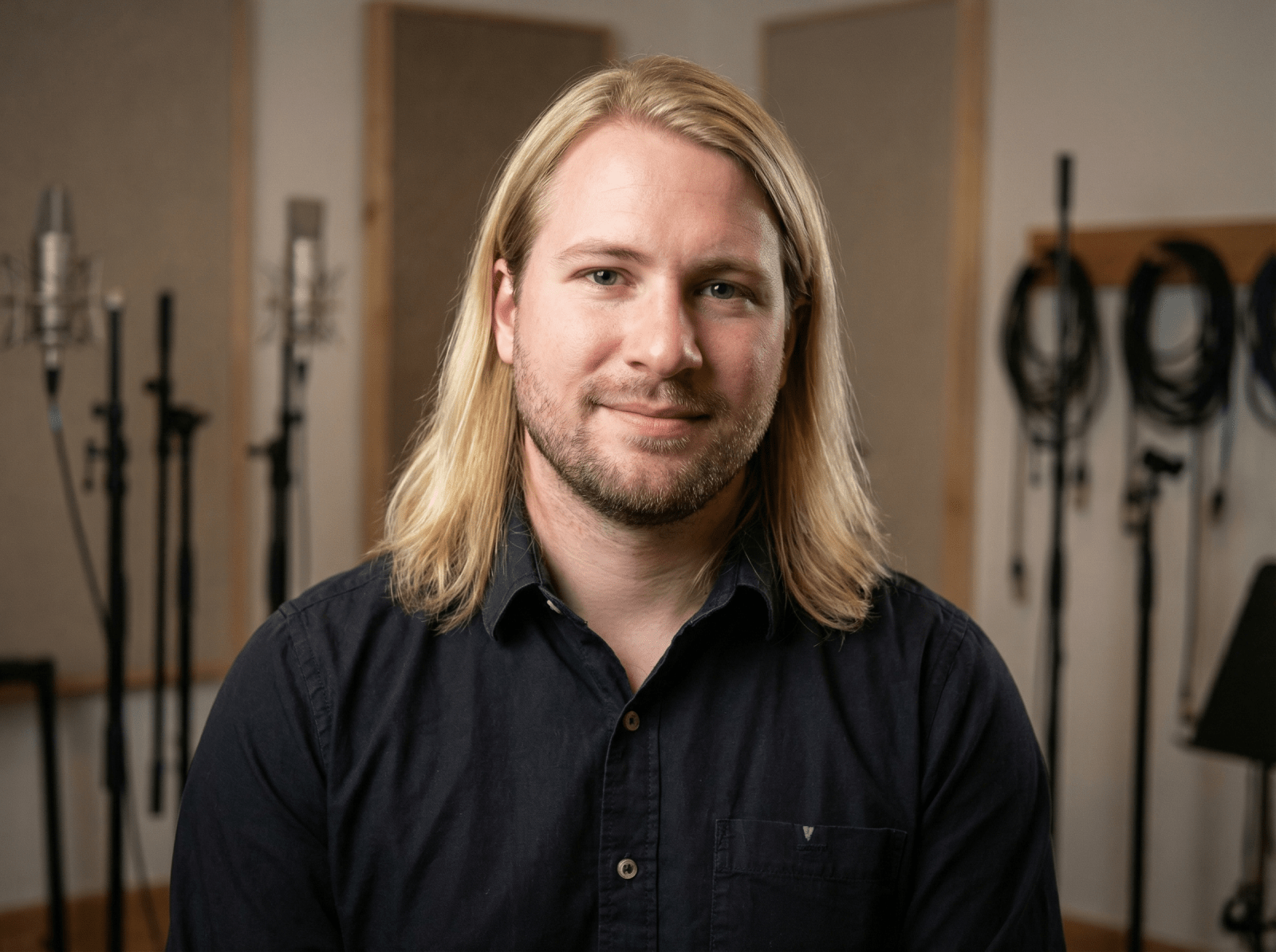
Cal Finnegan grew up in Cottage Grove, Oregon — southern Willamette Valley, logging country, a town that has spent recent decades finding another identity. His father Eero descended from a Finnish line where craft was an occupation not a hobby: he ran an independent lumber mill and built furniture in the evenings. Cal’s mother Judith made sure her children had music lessons. Cal got the cello.
He was six years old and, it turned out, suited for it. The cello is the instrument closest in range to the human speaking voice, and Cal, even as a child, was a better listener than a talker. He was careful instead than flashy, so his talent announced itself slowly. Then all at once. By fourteen he was driving to Eugene twice a week for lessons with a University of Oregon faculty member named Yael Bergström — a severe, generous teacher who recognized technique in the youngster but also something rarer: an instinct for the gravity of sound, for how long a note could be allowed to breathe. When he played something particularly well, she said nothing; when he slipped up, she had a habit of slapping the table in time, emphatically.
He enrolled at the San Francisco Conservatory of Music at seventeen on a partial scholarship, the youngest in his cohort. During his second year, a roommate dragged him to a small festival at the Swedish American Hall on a Tuesday night. There was an old-time string band from North Carolina on the bill. Cal stood near the back and watched the bass player — an older woman, two-finger pluck, percussive and exact — and felt something click.
He finished his conservatory degree — Bergström would have considered anything less a character failure — while spending his remaining two years haunting sessions in the Mission and teaching himself upright bass by ear. The crossover from cello was not automatic, but his training gave him a solid foundation and the dynamics that some bluegrass bassists never develop. The combination became the most distinctive thing about his playing: a cellist’s touch together with the confidence of someone who knows exactly where the beat lives.
After graduating he landed back in Cottage Grove for a spell, where his father put him to work in the mill. He discovered that his grandfather’s patience for material had been transmitted through the blood after all. He started repairing instruments, then building them. His upright basses are now in demand among devoted folk and bluegrass players. He builds only a handful a year, doesn’t advertise, and charges less than he should. He sees the instruments as an extension of the music — as something deserving skill and care but not necessarily self-promotion. Many mornings a visitor will hear Bill Monroe or Bach’s Cello Suite No. 1 drifting from his workshop in a converted outbuilding near Asheville.
Cal’s role in the band is to be solid but not rigid. His bass lines have the patience of a man who learned the instrument from the cello and the cello from a teacher who believed silence was as important as sound. When the arrangements go to strange harmonic places — which, given the material, they often do — his bass is a warm foundation, the thing that tells the listener they’re in good hands.
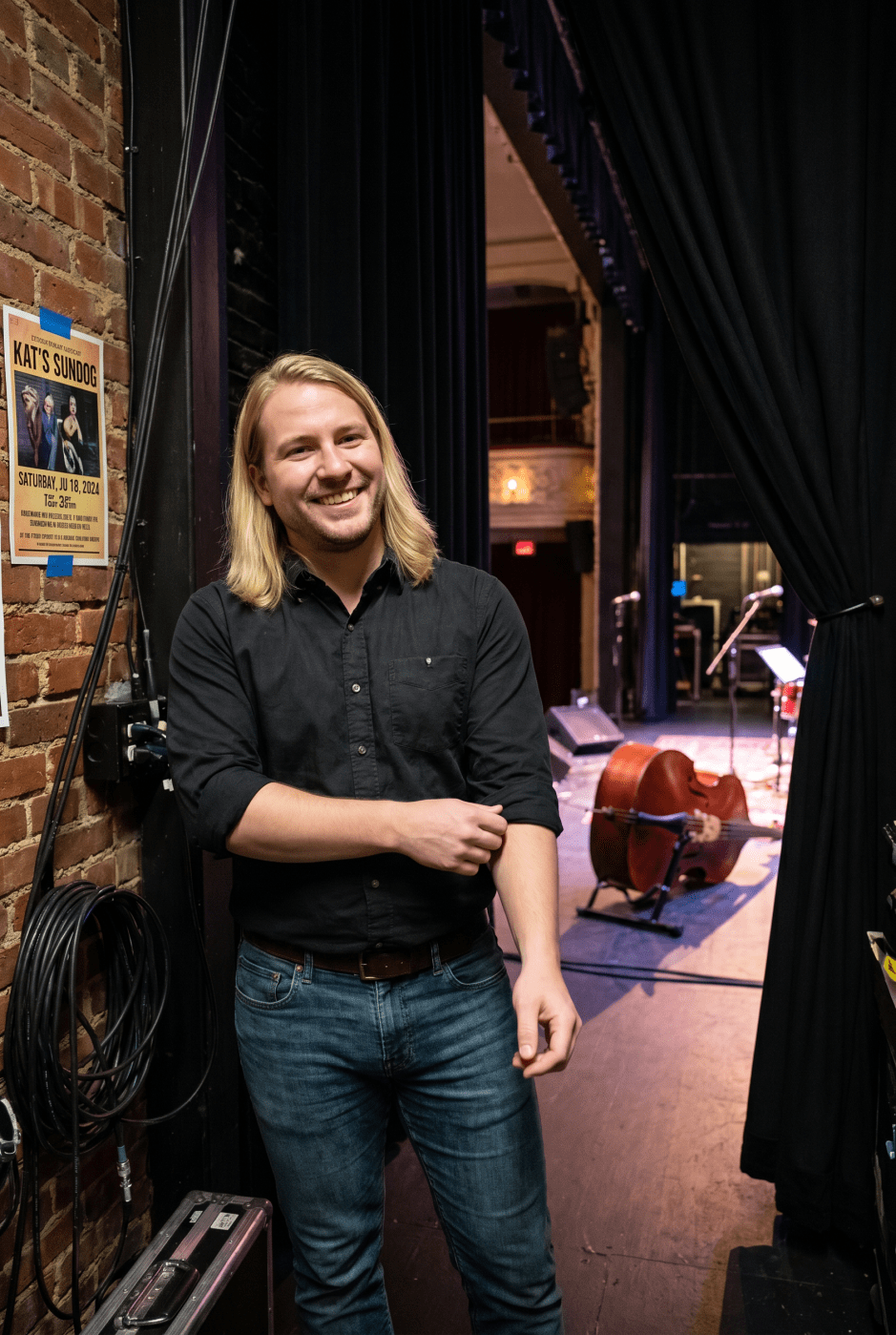
He also sings, in a baritone that surprised everyone including himself when it first emerged in his early twenties. He uses it infrequently, mostly on harmonies and demo tracks. He has no interest in the front of the stage.

