Rito Seco Records on AI, Artistic Integrity, and an Industry at a Crossroads
“We Put Our Name On It”
by Caitlin Ruark, The Alamosa Sentinel, May 13, 2026
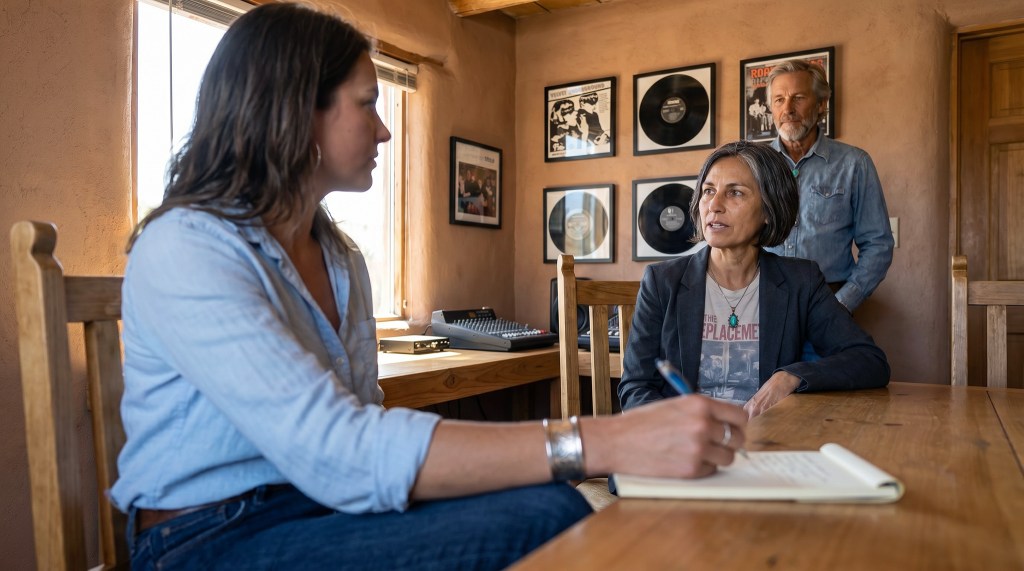
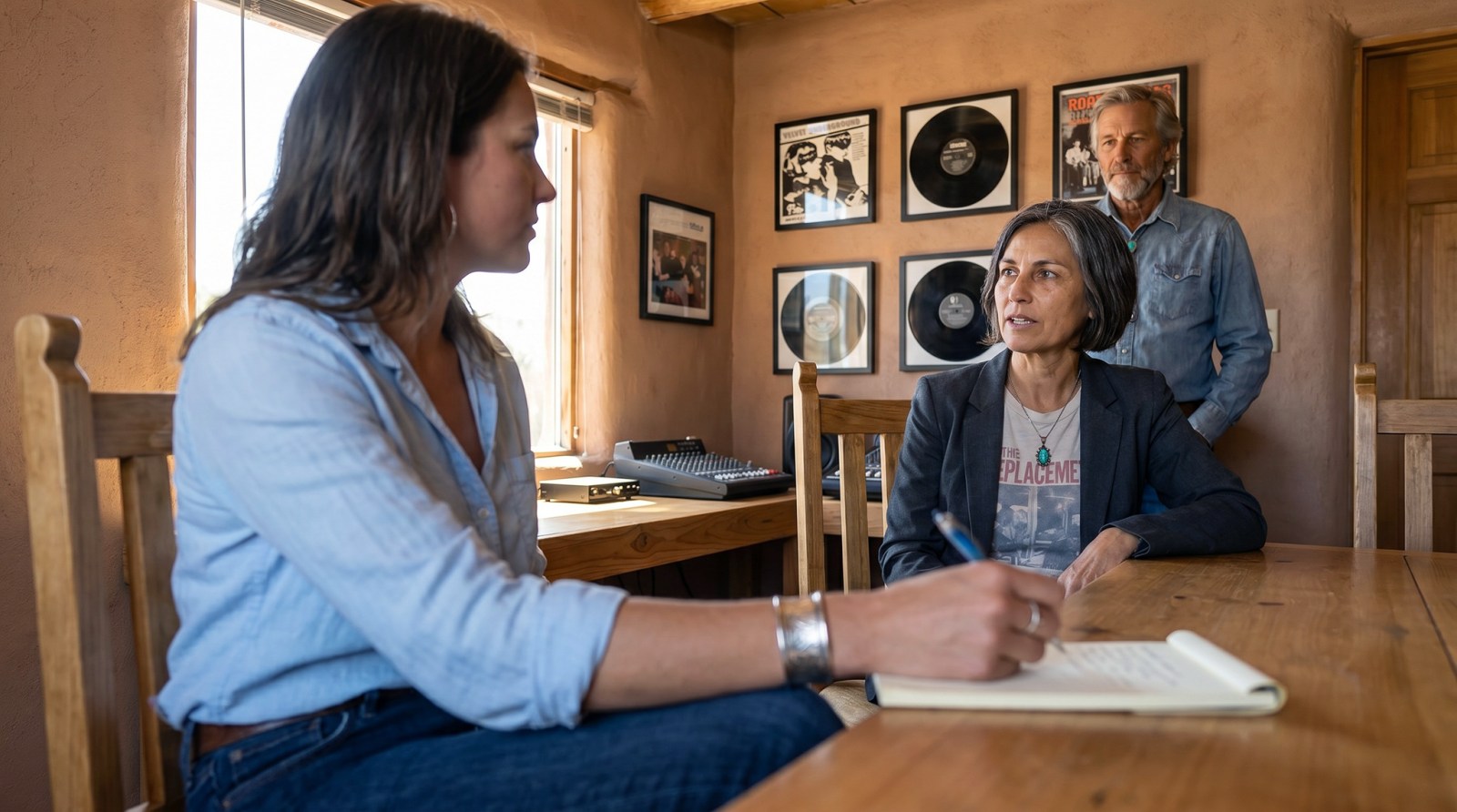
The boardroom at Rito Seco Records is a spare, practical room — a long table, six rustic chairs, a whiteboard with something partially erased on it that looks like a tour schedule. Through the wall to the left, faintly, you can hear someone doing a mic check. The label’s in-house live room shares the building, and on a Tuesday afternoon in San Luis, it’s in use.
Lenora Vásquez-Quinn, who founded RSR twenty-five years ago and still runs it, pours coffee without asking whether you want any. Across the table, A&R man Max Unger has the look of someone who agreed to this meeting under protest. He is wearing a bolo tie with a turquoise stone the size of a quarter.
The following has been edited for length.
You’re based in San Luis, which isn’t where most people would expect to find a record label. How did that happen?
Vásquez-Quinn: I grew up here, left, figured out that what I’d left for wasn’t what I wanted, and came back. The Valley is what I care about — the open spaces, the simplicity, the way sound carries when there’s nothing to stop it. I wanted to make records that sounded like this place. Twenty-five years later, here we are.
Unger: She’s underselling it. She built something unique here. That’s rare… more than you’d think.
Some of the tracks your artists release are flagged on streaming platforms as AI-assisted. That’s a fairly new label. What does it mean, and why are your releases carrying it?
Vásquez-Quinn: It means what it says. Some of our music involves AI in the composition or audio production process. Spotify and Apple are flagging it now because there’s a disclosure requirement — DistroKid added a self-reporting field for AI credits when you upload a track for distribution. We’ve been filling that out since before it was standard practice.
Unger: Before it was required.
Vásquez-Quinn: Before it was required. Because we were going to put our name on it either way, and we don’t put our name on things we’re not willing to stand behind.
Is there a stigma attached to that flag, in your view?
Vásquez-Quinn: Sure there is. And I’ll tell you why it’s misplaced. As a people, we’ve always told stories. Cave walls, fairy tales, theater, novels — none of it is real and all of it moves us. You walk into a movie theater knowing everything you’re about to see is made up, and you cry anyway. You open a novel knowing every word is invented, and you laugh out loud on a train, or in your living room. We’re hard-wired for that. The tool that made the story doesn’t determine whether the story lands. It never has.
We trust in the listener’s ability to engage with the music on its own terms. We want them to know where it came from. We want them to hear it, know it, and love it all the same. The flag isn’t a warning label. It’s information.
Max, you look like you want to say something.
Unger: (pause) I’ve been in this business forty years. I’ve watched technologies come and go and restructure things and leave a lot of people without work. I think AI in music has the potential to do real damage to working musicians — session players, composers, arrangers — people who built careers doing work that a model can now do for next to nothing. That bugs the shit out of me. Excuse my French. It should concern everyone in the business.
And the copyright situation is a mess. These models train on existing music. Whose music? Under what license? Who got paid? Those aren’t hypothetical questions. They’re going to be litigated for a long time, and in the meantime, real artists are in a gray area they don’t want to be in.
Vásquez-Quinn: All fair.
Unger: I’m not finished. (To the reporter) She does that.
So where does that leave you, working at a label that uses it?
Unger: It leaves me where I’ve always been, which is trying to make sure the work we use is credited, compensated, and protected. The artists on our records are performing musicians. They’re contracted. They’re paid. Their names are on the work. If we use a licensed vocal instrument or a licensed melodic element, that license has to be clean and the originating artist has to be getting something out of it. That’s the floor. That’s not negotiable for me.
Does that mean I think AI-assisted production is great for the future of the industry? No. But if the work is licensed, the artists are credited, and the money flows the right direction — that’s the best outcome available in a situation I didn’t design and don’t trust.
Vásquez-Quinn: Which is why he still works here.
Unger: Which is why I still work here.
Can you say who you’re currently working with?
Vásquez-Quinn: Our current focus is a group called Kat’s Sundog — four instrumentalists and vocalists out of North Carolina, recording material in a folk… Appalachian folk idiom. The album is called Snakeweed Season. It’s based on a local collection of poetry. It’s available now on all major platforms. They just played a matinee in Charlotte that people are still talking about.
Last question — what do you want people in the Valley to know about what you’re doing here?
Vásquez-Quinn: That we’re making music we believe in, and we’re doing it honestly. The AI flag is on the record because we put it there. Nobody made us. If you want to have an argument about what that means for art and commerce and the future of the industry, come find us. We’ll make coffee.
Unger: (standing) She means that literally. She’ll talk your ears off.
Vásquez-Quinn: (wryly) Yours are still there, compa. Big as ever.
Rito Seco Records is based in San Luis, Colorado. Kat’s Sundog’s debut album, Snakeweed Season, is available on Spotify, Apple Music, and other major streaming platforms.
 Rito Seco Records
Leave a comment