Kat’s Sundog is a fictional band. The music is real.
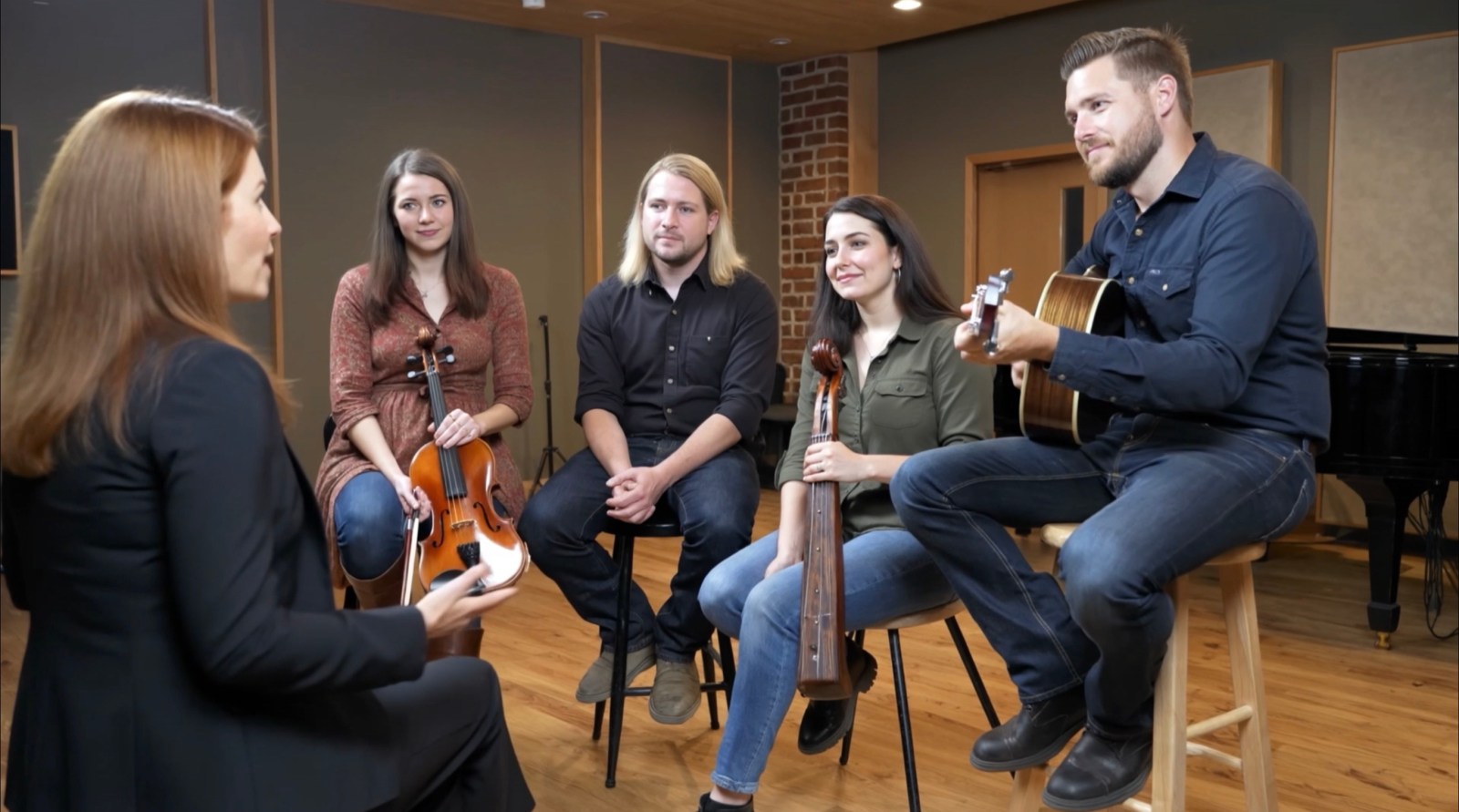
That apparent contradiction is the project’s premise and its point of departure. Snakeweed Season, the band’s debut album on the fictional Rito Seco Records label, consists of fifteen songs adapted from an actual poetry collection — one written over fourteen months by a poet working in the Appalachian and Western American traditions. The songs were developed through a hybrid production process that involved AI-assisted composition, extensive human arrangement and mastering, and a sustained engagement with the folk and roots music traditions the band inhabits fictionally.
Kat’s Sundog is, more precisely, a distributed multidisciplinary fictional storytelling project. The music is its spine, but the project extends across multiple platforms and forms: a record label with its own identity and voice, detailed fictional biographies for four band members, critical writing including a full album review by a fictional musicologist, visual identity and brand design, social media presence, merchandise, and an ongoing narrative that is developing its own dramatic complexity. We’re currently writing an 80-page university thesis on pre-WWII modal tunings in the Blue Ridge dulcimer tradition. Just as deep background for one of the characters. An imaginary character. A real thesis.
Each element is designed to reinforce the others, building a world coherent enough to sustain genuine engagement and serious enough to merit it.
The project sits in a tradition that has precedents in both literature and music. Fictional personas are as old as the novel and as recent as Gorillaz, Josie and the Pussycats, or Hayden Anhedönia’s Ethel Cain — artists who constructed characters, mythologies, and narrative universes as the container for their work. What distinguishes Kat’s Sundog is the degree of integration across disciplines: the literary source material, the music production, the visual design, the critical apparatus, and the fictional biography are all conceived as parts of a single coherent object rather than supplementary material around a primary product.
Visitors to any of the project’s platforms will find content that is designed to be experienced on its own terms: the music as music, the biographies as character studies, the critical writing as serious engagement with real questions about authenticity and tradition in American roots music. The fictional frame is disclosed here and in the project’s disclaimers, but it is not the first thing the work asks you to think about. The first thing it asks is whether the songs move you. Everything else is context.
Mountain Songs For Open Country. Where America Meets Americana.
“…when dragged into prominence by half poets, the result is not poetry,
nor till the autocrats among us can be
“literalists of
the imagination” — above
insolence and triviality and can presentfor inspection, imaginary gardens with real toads in them, shall we have
Marianne Moore, “Poetry”
it.”

