Lenora Vásquez-Quinn | Delia Archuleta | Cole Dreyer
Max Unger, A&R, Rito Seco Records
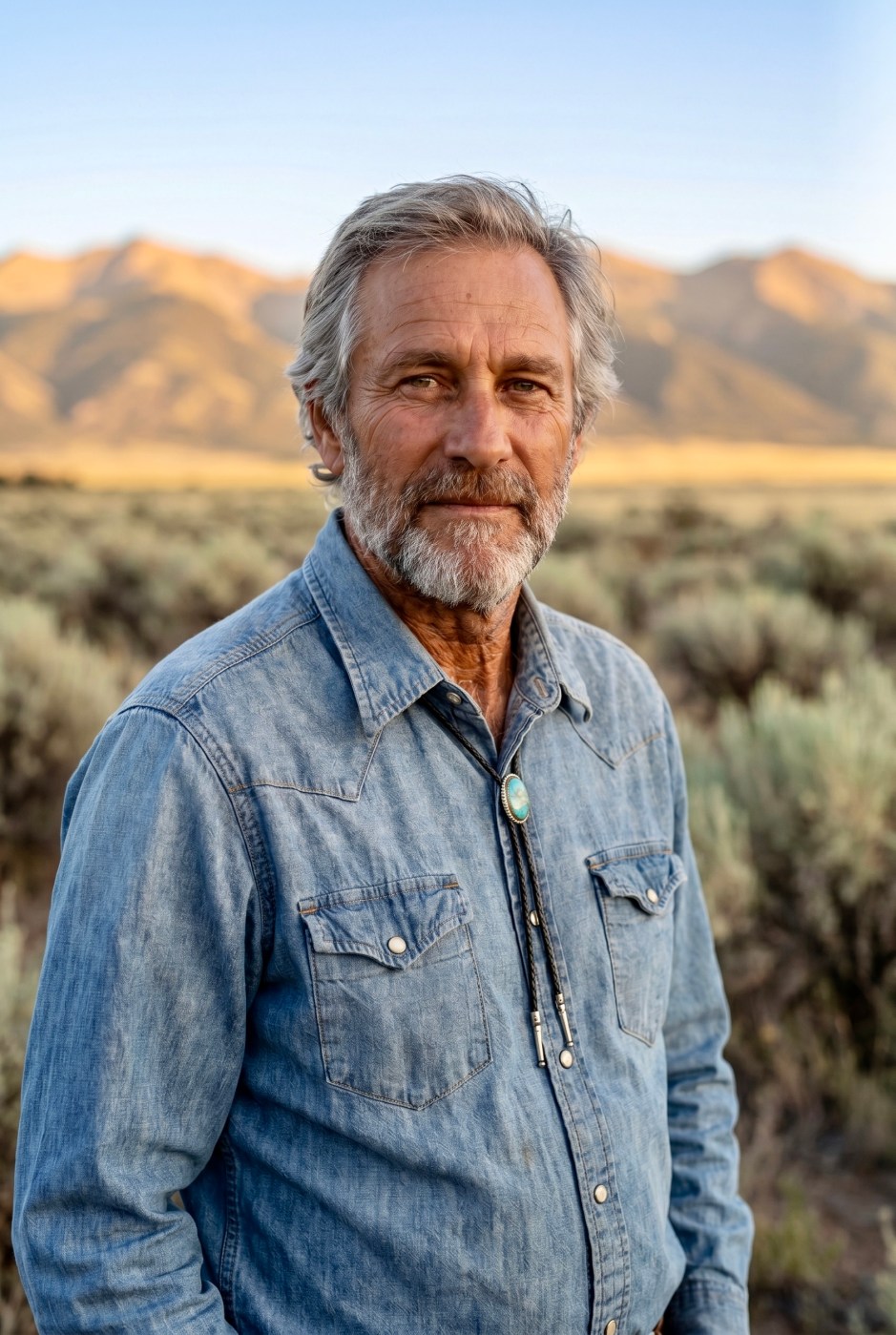
Born in Laramie, Wyoming, the son of a Union Pacific dispatcher and a piano teacher who moonlighted in a country swing band on weekends, young Max absorbed more music theory from the back seat of his mother’s Buick than he ever did from formal study.
Max — only Elara calls him Mr. Unger — spent his twenties and thirties managing small folk and acoustic acts across Wyoming, Montana, and Colorado. The kind of regional circuit that never makes the trades but keeps roadhouses alive. He developed a reputation for an accurate ear and a low tolerance for artists who weren’t ready to work. By his forties he’d moved into A&R proper, first at a short-lived Denver imprint, then independently. Nora found him through mutual contacts in the Telluride bluegrass orbit and brought him on when RSR started signing acts that needed more than a handshake agreement.
He used to give developing artists a year or more of his time if he thought they had it in them. He no longer does. “I know what I’m looking for in about forty-five minutes,” he says. “Either they’re NHL level or close to it.” Kat’s Sundog was close to it.
Unger calls Monte Vista home: it’s near enough to San Luis for him to be on-site when needed, and like most A&R work in 2026, a good deal of it happens over a phone or a laptop anyway — streaming a rough mix at midnight, taking a call from a manager two time zones away, deciding in short order if something is worth the drive. When he’s needed in the building, there’s a small office off the mixing room with a couch that’s seen better days. You won’t hear him complain.
Does that mean I think AI-assisted music is great for the future of the industry? No. But if the work is licensed, artists are credited, and the money flows in the right direction — that’s the best outcome available…
Alamosa Sentinel, May 8, 2026

